Day 23: MQTT Climate

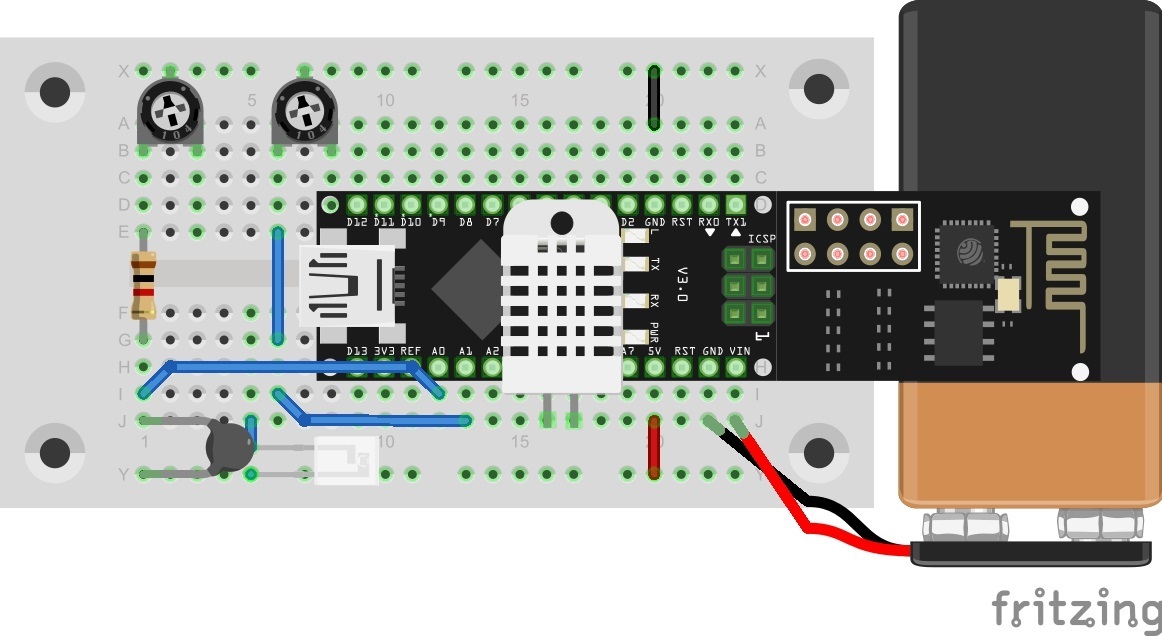
Behind the door for today is a battery clip for a 9 V block, with which you can make the entire system moveable. An alternative to a battery is a power bank (a rechargeable battery pack, normally for mobile phones). You can see in today’s layout picture how to connect a 9 V battery correctly. This is how you can connect a 9 V battery to today's layout Climate data should be captured again today. But this time they are published through the MQTT broker and are thus accessible worldwide. The data could thus be called up via a plug-in and stored in a database. ...
23.12.2016 · 5 min · Fabian Kainka

Day 18: Weather monitoring

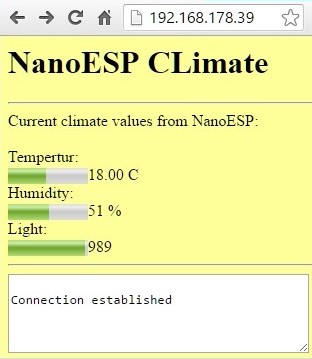
Behind today’s door is a very special component, namely a humidity sensor. Together with the phototransistor and the NTC, it creates a weather station for at-home use. The following layout is necessary for this purpose: The layout with all sensors (resistors 1 kohm) Today’s layout is a bit fiddly. Especially at the point where the potentiometer on the right of the image sits, it touches the NanoESP. But that’s not really a problem as long as the contact on the left of the image is plugged firmly into the board. ...

18.12.2016 · 4 min · Fabian Kainka

Day 14: Long-term temperature measurement

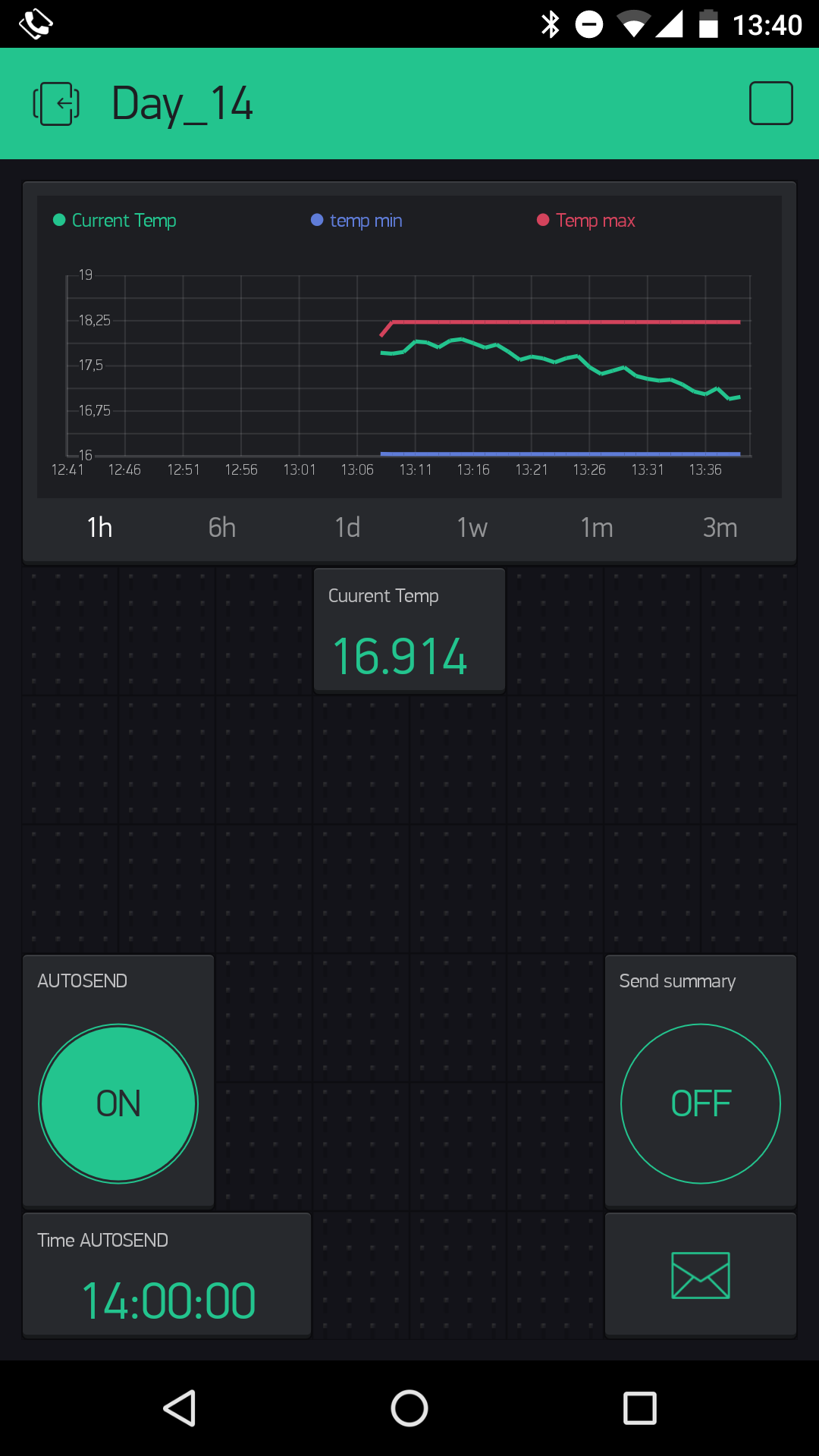
Behind today’s door is an NTC sensor (negative temperature coefficient thermistor). Its conductivity changes depending on the temperature. You’ll use the sensor today to undertake a long-term measurement of the temperature. As a small bonus, you can select a time at which you get a summary by email. For today’s layout, in addition to the NTC, you’ll also need the potentiometer and a 1-kohm resistor. You can make a fine adjustment of the temperature with the potentiometer. ...

14.12.2016 · 3 min · Fabian Kainka

Day 24: Fire alarm for the Christmas tree

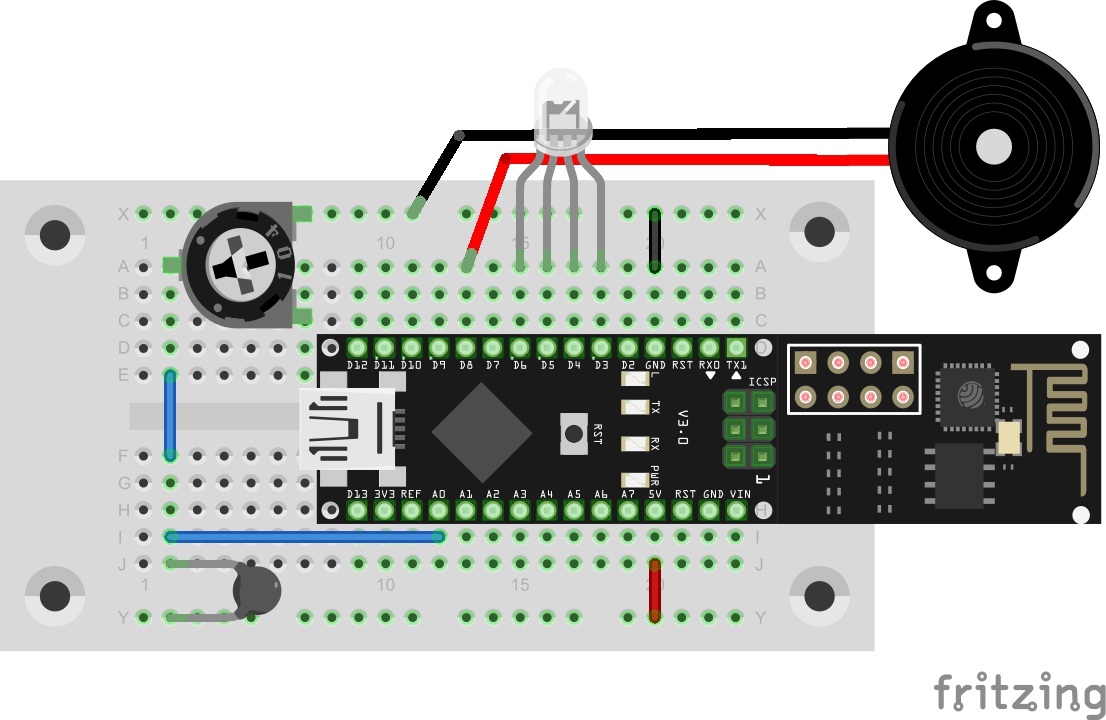
The final project consists of several elements you have been introduced to in the course of the advent time. One function is the Cheerlights function presented the day before. You can also receive the current colour of the Cheerlights project and display it with the RGB-LED. The board is also used for long-term monitoring of the temperature. At the same time, the board is used to emit an alarm sound when the temperature exceeds a specific value, e.g. because there is a fire. As a last function, the board can be used as a Christmas bell, by making it play the song Jingle Bells with a time-controlled TalkBack command. All in all, today’s project is an all-rounder for the Christmas tree. ...

24.12.2015 · 5 min · Fabian Kainka